
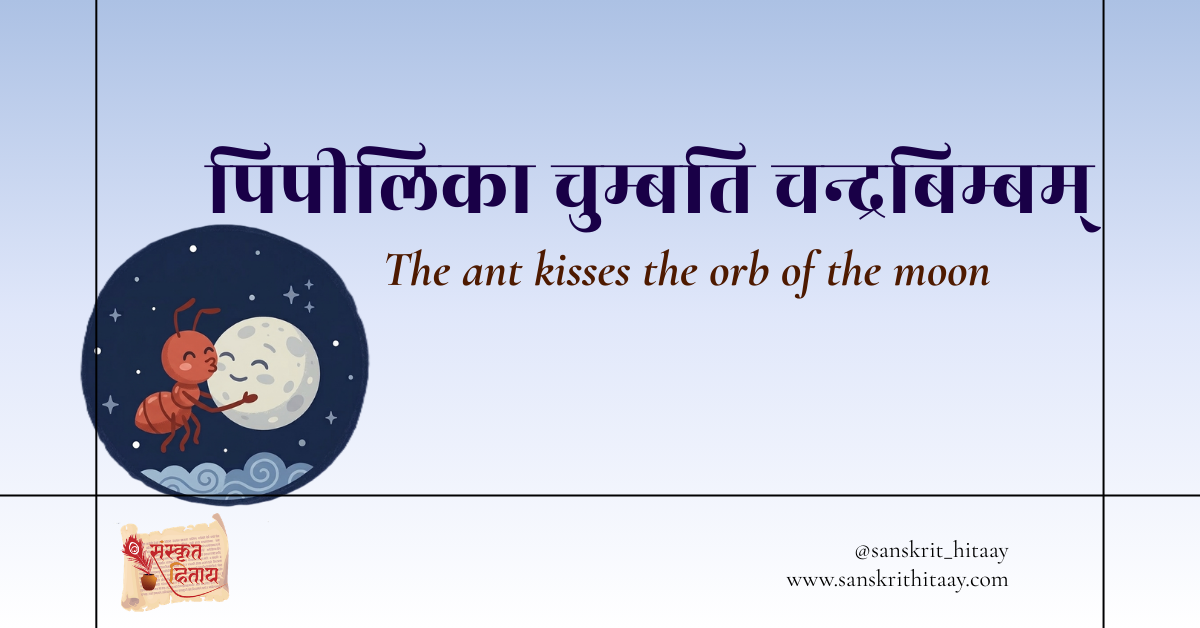
Samasyāpūrti – completing a verse based on a single quarter ‒ is one of the most venturous and fascinating aspects of Indian poetry traditions. Often a few quarters of the verses are are so impactful that they become the most go-to-quarters to be rejuvenated by poets, of course, with newer imagery.
तवानने मानिनि! मञ्जुलस्य यदञ्जनस्यैष लवो निमग्नः।
इतीव लोकः प्रकरोति तर्कं पिपीलिका चुम्बति चन्द्रबिम्बम्॥
Lakṣmaṇabhaṭṭa’s verse in Padyaracanā
O Lady, as a drop of añjana has sunk upon your beautiful face, people are imagining it as though an ant were kissing the orb of the moon.
हे मानवती! क्यों कि तुम्हारे सुन्दर मुख पर अंजन की एक बूँद बैठ गई है, लोग ऐसा तर्क कर हैं मानो कोई चींटी चन्द्रमा के मण्डल को चूम रही है।
सतीवियोगेन विषण्णचेतसः प्रभोः शयानस्य हिमालये गिरौ ।
शिवस्य चूडाकलितं सुधाशया पिपीलिका चुम्बति चन्द्रमण्डलम्॥
Gaṇapatimuni’s verse in Madhusudan Penna’s Kāvyakāṇṭha
Seeing Lord Śiva lying in despondency on the Himalayan mountain after his separation from Satī, an ant licks the crescent moon on his forehead, mistaking it for nectar.
सती से वियोग के बाद हिमालय पर्वत पर विषाद में पड़े हुए भगवान् शिव को देखकर एक चींटी उनके ललाट पर स्थित चन्द्रकला को अमृत समझकर चाटती है।
असज्जनः सज्जनसङ्गिसङ्गात्करोति दुःसाध्यमपीह साध्यम्।
पुष्पाश्रयाच्छम्भुशिरोऽधिरूढा पिपीलिका चुम्बति चन्द्रबिम्बम्॥
compiled in subhāṣitaratnabhāṇḍāgāra & subhāṣitaratnākara
Even a worthless person attains the unattainable through association with virtuous people. An ant, which reached the forehead of Lord Śiva through its association with the flower (used in the worship of the Lord), kisses the (crescent) moon (adorning his forehead).
निरर्थक मनुष्य भी महान् जनों के संग रहने वालों के संग के प्रभाव से दुःसाध्य वस्तु को साधित कर सहता है। जैसे पुष्प के आश्रय से महेश्वर के मस्तक पर पहुंची चिटी चंद्रमंडल को चूमती है।
अनङ्गबाणाकुलितस्य शम्भोः शिरो भवानीचरणेऽतिनम्रम्।
विलोक्य काचिच्चरणे चरन्ती पिपीलिका चुम्बति चन्द्रबिम्बम्॥
quoted in padyaveṇī by Veṇīdatta
Seeing the head of Śiva—who, overcome by the arrows of Cupid, is bent very low at the feet of Pārvatī—an ant that has been moving there kisses the orb of the moon on his head.
कामदेव के बाणों से अभिभूत होकर अपनी पत्नी पार्वती के चरणों पर अत्यन्त झुके हुए शिव के मस्तक को देखकर वहाँ विचरण करती हुई एक चींटी उनके सिर पर स्थित चन्द्रमण्डल को चूमती है।
यदुच्चकुड्येषु निघट्टिताङ्गनिष्यन्दि पर्वक्षणदासु यत्र।
तत्रस्थिताधौतगुडभ्रमेण पिपीलिका चुम्बति चन्द्रबिम्बम्॥
Gaṅgāvataraṇa Campū 7.70 by Śaṅkara Dīkṣita
Where the walls are so high that the discharge from the bodies of elephants rubbing against them flows down, there, during the nights of the festival, ants—mistaking it for unwashed molasses—crawl upon the walls and kiss the orb of the moon.
जहाँ ऊँची ऊंची दीवारों पर शरीर रगड़ते हुए हाथियों के गण्डस्थल से निकला स्राव नीचे बहता है, वहाँ उत्सव की रात्रियों में चींटियाँ उसे अपरिष्कृत गुड़ समझकर दीवारों पर चढ़ती हैं और चन्द्रमण्डल को चूमती हैं।
अङ्कं च पङ्कं च कलङ्कमङ्के चन्द्रस्य केचिद् ब्रुवते ब्रुवन्तु।
ब्रूमः सुधास्वादपरैकसक्ता पिपीलिका चुम्बति चन्द्रबिम्बम्॥
Paṇḍita Bhāgavatācārya in Samasyā Samajyā
Let some speak of the dark spot on the moon’s surface as a mark, a stain, or a blemish—let them say what they will. We, however, say that an ant, intent solely on tasting nectar, is kissing the lunar disc.
कुछ लोग चन्द्रमा की सतह पर स्थित उस काले चिह्न को चिह्न, कलंक या दोष कहें—वे जो कहना चाहें कहें। परन्तु हम तो यह कहते हैं कि अमृत का स्वाद लेने की इच्छा से एक चींटी चन्द्रमण्डल को चूम रही है।
Some Samasyā-pūrtis by poets of last century
compiled from गैर्वाणी-मासिक-पत्रिका १४.४
note चन्द्ररेखाम् instead of चन्द्रबिम्बम्
शिवे शिवाश्लिष्टतनौ शयाने तदीयचूडाग्रविभासमानाम्।
सुधारसास्वादनलोलचित्ता पिपीलिका चुम्बति चन्द्ररेखाम्॥
– K. C. Jaychandra Shastri
While Śiva lay with his body embraced by Śivā, an ant, its mind eager to taste the essence of nectar, kisses the crescent moon shining upon the tip of his matted locks.
जब शिव अपने शरीर से शिवा को आलिंगन कर रात्रि में सो रहे थे, तब अमृत के रस का स्वाद लेने की इच्छा से प्रेरित एक चींटी उनकी जटाओं के अग्रभाग पर चमकती हुई चन्द्रकला को चूमती है।
काञ्चीपुरीमध्यविलासिकाञ्चीं पुण्ड्रेक्षुहस्तां पुरुषार्थदात्रीम्।
माधुर्यलोलाऽधिगता भवानीं पिपीलिका चुम्बति चन्द्ररेखाम्॥
– V. M. Padmanabh Sharma
Through its longing for sweetness, an ant kisses the moon-digit of Bhavānī—she who is the girdle adorning the middle of Kāñcīpurī, who holds a sugarcane stalk in her hand, and who bestows the aims of human existence.
मधुरता की अभिलाषा से प्रेरित एक चींटी भवानी की चन्द्रकला को चूमती है—वह भवानी जो काञ्चीपुरी के मध्य की करधनी के समान शोभा बढ़ाने वाली हैं, जिनके हाथ में इक्षुदण्ड है, और जो पुरुषार्थों को प्रदान करने वाली हैं।
सुधामयीं स्वादुरसानुगेयं गिरीशमौलिप्रसृतां धरित्र्याम्।
बिलोद्गता बन्धुगणैस्समेता पिपीलिका चुम्बति चन्द्ररेखाम्॥
– R. Gopal
Like nectar, accompanied by a pleasant taste, the streak of the moon descends from the head of Śiva to the earth. Emerging from their hole, a swarm of ants gathers to kiss that lunar crescent.
अमृत के समान, मधुर स्वाद से युक्त चन्द्रकला शिव के मस्तक से पृथ्वी पर उतरती है। अपने बिल से निकलकर चींटियों का एक झुण्ड उस चन्द्रकला को चूमने के लिए एकत्र हो जाता है।
कर्तुं न शक्यं हि यदस्ति कर्म तदेव शक्यं सुजनस्य सङ्गात्।
महेशमूर्ध्नि स्थितपुष्पसङ्गात् पिपीलिका चुम्बति चन्द्ररेखाम्॥
That task which is otherwise impossible to accomplish can indeed be achieved through the company of virtuous people. Just as an ant, by clinging to a flower placed upon the head of the Great Lord Śiva, comes to kiss the crescent of the moon.
जो कार्य अन्यथा असाध्य होता है, वह भी सज्जनों के संग से सिद्ध हो जाता है। जैसे एक चींटी महादेव शिव के मस्तक पर अर्पित पुष्प से चिपककर वहाँ स्थित चन्द्रकला को चूमने तक पहुँच जाती है।
The most creative one:
स्वरङ्गावल्ल्यां नवोढा पश्यति स्म मया विभ्रमाच्छर्कया सुप्रभाते।
हा धिङ्मां रेखितां रङ्गवल्लीं पिपीलिका चुम्बति चन्द्ररेखाम्॥
Leaving it untranslated, because…why not? 🙂
Reply if I missed any (or your own composition of this samasyā)!